
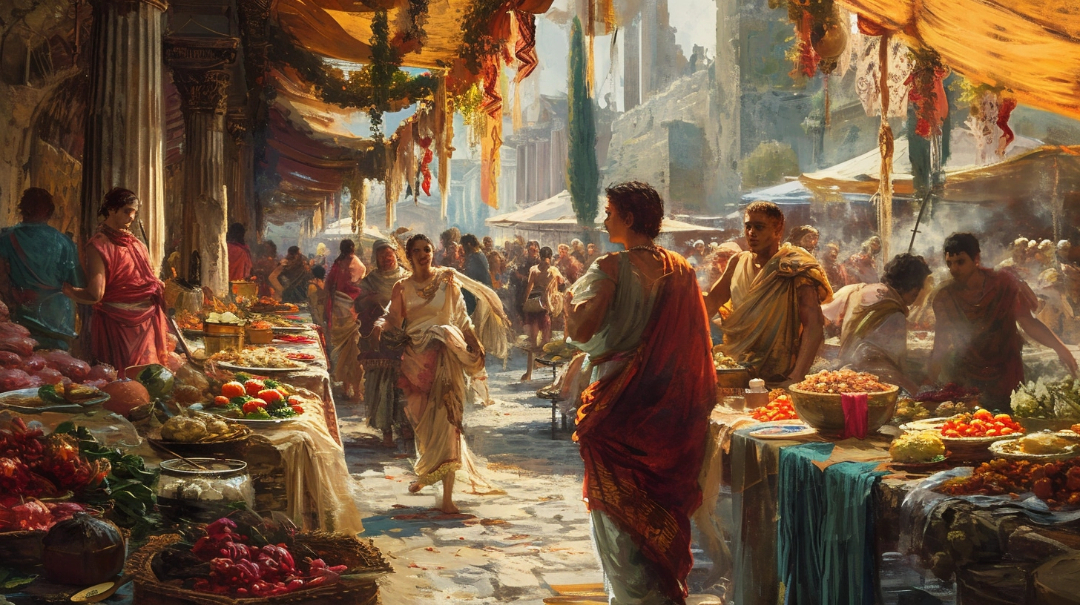
Image generated on AI
In the shadow of Mount Vesuvius, the ancient city of Pompeii continues to reveal the intricate details of Roman life before the catastrophic eruption in AD 79. The latest initiative dives into the vibrant world of ancient textile dyeing, resurrecting the rich hues that once adorned the city’s inhabitants.
Claudio Cutuli, an esteemed master dyer from Umbria, is at the helm of this colorful project. His expertise lies in using natural ingredients for dyes, mirroring the methods seen in Pompeii’s frescoes that show cupids playfully engaged in dyeing fabrics.
These historical pigments are extracted from a variety of natural sources: rose madder roots provide a Pompeiian red, walnut husks create earthy browns, elderberries produce deep blacks and grays, and cardamom seeds offer amber, yellow, and green tones.
Cutuli is crafting scarves in three styles that are inspired by motifs found in the lavish House of the Vetti frescoes, particularly those depicting the industrious cupids.

Image via Pompeii Sites
These pieces with plant-based hues not only pay homage to ancient craftsmanship but also support the ongoing preservation of Pompeii, with half of the proceeds going towards the restoration efforts within the Park of Pompeii. To further the authenticity of this endeavor, Pompeii’s gardeners have cultivated a nursery mirroring the flora once used for dyes, providing a living color palette for future textile creations.
This initiative is part of the larger Azienda agricola Pompei project, which involves various private entities collaborating to revitalize and enrich the park’s numerous green spaces. It spans a wide array of activities, including olive growing, winemaking, horticulture, and beekeeping, all aimed at preserving biodiversity and promoting environmental education.
This immersive project, steered by Pompeii’s director Gabriel Zuchtriegel, aims to paint a fuller picture of daily life in the ancient city, particularly highlighting the economic and social aspects often overshadowed by grander narratives. By reviving the long-forgotten hues of Pompeii, visitors can experience a more vibrant and tactile connection to the past, bringing the city’s silent stones to life with every thread colored in historical shades.
“The art of dyeing is an example of excellence in the craft traditions of Italy, and has its roots in ancient Pompeii with its fullonicae (fulleries), the ancient laundries, where everything was eco-friendly and natural,” expresses Gabriel Zuchtriegel, Director of the Archaeological Park of Pompeii, “We shall therefore work on the use of dyeing plants in Pompeii, but we are also considering setting up workshops and spaces to tell the story of the tradition of this art from ancient fulleries to the present day.”
[via Associated Press and Pompeii Sites, images via various sources]

by rrollins

Recent Comments